
Fridge Temperature Settings to Keep Food Safe and Fresh
Most people will only change the setting on their fridge when it is first installed, and then forget about it. This works reasonably well in a stable, temperate climate with predictable conditions.
In Dubai, it is a habit that quietly costs households money in spoiled food, accelerated appliance wear, occasional food safety risks and home appliance damage that go unnoticed until appliances fall down.
Getting fridge temperature settings right in Dubai pays back consistently in fresher food, reduced energy usage, a longer-lasting appliance, and genuine peace of mind about what you are serving your family.
What Temperature Should a Fridge Actually Be Set To?
The internationally recognised safe zone for refrigerator storage sits between one and four degrees Celsius. This range is cold enough to slow bacterial growth on perishable foods to a safe level while remaining warm enough to prevent freezing of items stored in the main compartment.
Food safety authorities across the world consistently recommend this range as the standard, and it applies regardless of what country you live in or what brand of refrigerator you own.
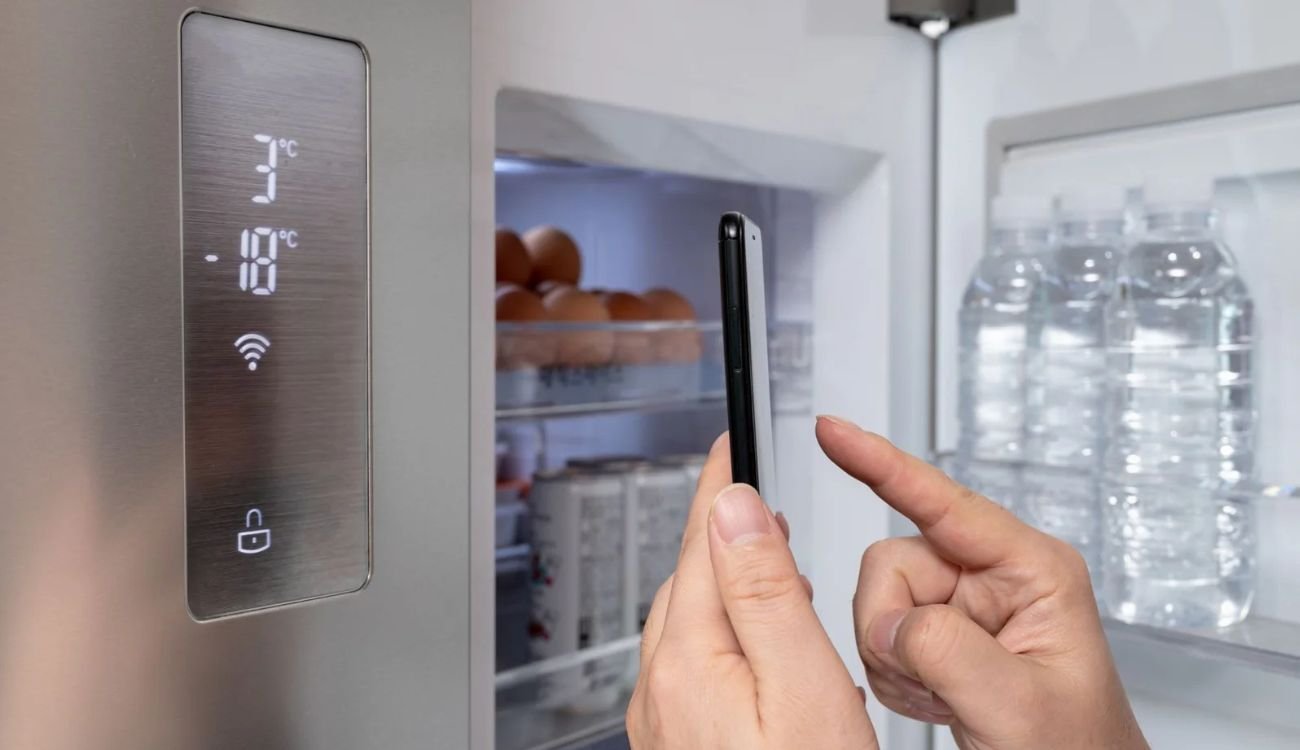
Four degrees Celsius is the upper limit of safe refrigeration, not the target. Setting your fridge temperature to three degrees gives you a practical buffer against the fluctuations that occur every time the door is opened, every time a warm item is placed inside, and every time the compressor cycles.
In Dubai’s kitchen environment, where ambient temperatures are higher than in most climates, those fluctuations push the interior temperature above the safe zone more quickly. A setting of three degrees provides that buffer reliably without pushing into territory where food begins to freeze.
What Temperature Should the Freezer Be Set To?
The freezer compartment should be kept at minus eighteen degrees Celsius. This is the recommended temperature by food safety organisations worldwide and the point at which bacterial activity effectively stops rather than merely slows.
At minus eighteen degrees, food can be stored safely for the durations indicated on packaging labels without quality degradation from bacterial growth.
Some households in Dubai set their freezers colder than minus eighteen degrees, assuming colder is always safer. This is not accurate. Temperatures below minus eighteen degrees provide no additional food safety benefit but do increase energy consumption and compressor wear.
Given that the compressor in a Dubai refrigerator is already working harder than it would in a cooler climate, running the freezer colder than necessary adds unnecessary strain that accumulates over time.
Why Dubai’s Climate Makes Temperature Settings More Critical
Even when the kitchen air conditioning is running, the ambient temperature in a Dubai kitchen during summer is typically higher than the conditions most refrigerators were factory-calibrated for. Every time the fridge door opens, warm air enters the compartment and the interior temperature rises temporarily.
The compressor then works to bring that temperature back to the set point. Refrigerator repair In Dubai summer, this recovery takes longer and places more sustained load on the compressor than the same cycle would in a European or North American kitchen.
The practical consequence is that the gap between your set temperature and the actual interior temperature at any given moment is wider in Dubai than in cooler climates. A fridge set to four degrees Celsius in a Dubai summer kitchen may regularly reach five or six degrees during periods of heavy use. That gap is where food safety risk lives. Setting the temperature to three degrees rather than four accounts for this reality and keeps the effective interior temperature within the safe zone even during the hottest and most active parts of the day.
How to Check Whether Your Fridge Is Actually Reaching Its Set Temperature
The temperature display on a modern refrigerator shows the target set point, not the actual measured interior temperature at any given moment. Both numbers are usually similar but not identical, and the difference matters for food safety and appliance performance.
The only reliable way to know what temperature your fridge is actually maintaining is to place a standalone thermometer inside the main compartment for at least twelve hours, preferably overnight when the door remains closed, and check the reading in the morning.
Place the thermometer on the middle shelf, away from the back wall and the door, as both locations give readings that do not represent the average interior temperature accurately. The back wall is adjacent to the cooling element and tends to read colder than the rest of the compartment.
The door area is the warmest zone in any refrigerator and will consistently read higher than the interior. A reading on the middle shelf gives the most representative picture of what your food is actually experiencing.
If the measured temperature consistently exceeds your set point by more than one degree, particularly in summer, the following factors are worth checking before concluding the appliance needs repair:
- The condenser coils at the back or beneath the unit may be dusty, which reduces cooling efficiency
- The door seals may have gaps or damage that allows warm air to enter continuously
- The unit may be positioned too close to a wall or heat source, restricting the ventilation it needs
- The fridge may be significantly overfilled, restricting airflow between items and preventing even cooling throughout the compartment
- The temperature setting itself may need to be adjusted downward by one degree to compensate for Dubai’s ambient conditions
How Different Zones in Your Fridge Have Different Temperatures
A refrigerator is not a single uniform temperature environment, and understanding the natural variation within the compartment helps you store different categories of food in the locations where they will be best preserved.
Storing the right items in the right zones extends freshness meaningfully and reduces food waste without requiring any change to the overall temperature setting.
Coldest Zones
The back of the middle and lower shelves, where air from the cooling element circulates most directly. Best for raw meat, poultry, fish, and dairy products that require the coldest consistent temperature within the safe range.
Warmest Zones
The door shelves and upper compartment, which experience the most temperature fluctuation from opening and closing. Best suited for condiments, juices, and items less sensitive to mild temperature variation.
The crisper drawers at the bottom of the refrigerator maintain a slightly higher humidity level than the main compartment, which makes them the best location for fresh vegetables and fruits.
Storing produce in the main compartment exposes it to the drier circulating air that keeps the rest of the fridge fresh but accelerates moisture loss from fruits and vegetables, causing them to wilt and deteriorate faster than they would in the crisper.
Does Setting the Fridge Colder Keep Food Fresher for Longer?
This is one of the most common assumptions about fridge temperature settings, and it deserves a direct answer. Setting the refrigerator colder than three to four degrees Celsius does not meaningfully extend the freshness of most foods.
Bacterial growth slows progressively as temperature drops, but the difference in bacterial activity between two degrees and four degrees is not significant enough to produce a noticeable difference in how long food stays fresh.
What does produce a noticeable difference is maintaining a consistent temperature within the safe range rather than allowing regular fluctuations above it.
Setting the fridge significantly colder than the recommended range also carries practical downsides. Items stored near the back wall and cooling element can begin to freeze, ruining the texture of vegetables, dairy products, and delicate items like fresh herbs.
The compressor runs more frequently and for longer periods to maintain a lower temperature, increasing energy consumption and wear. In Dubai’s climate, where the compressor is already under more sustained load than in cooler environments, adding unnecessary cold-running demand shortens the appliance’s service life in a measurable way.
Specific Temperature Recommendations by Food Category
While the overall fridge temperature setting of three to four degrees applies to the compartment as a whole, different food categories have slightly different optimal storage conditions worth understanding.
- Raw meat, poultry, and seafood should be stored at the coldest part of the fridge, ideally below four degrees, and consumed within one to two days of purchase in Dubai’s climate
- Dairy products including milk, cheese, and yoghurt keep best between one and four degrees and should be stored toward the back rather than the door
- Cooked leftovers should be cooled to room temperature before refrigerating, then stored in sealed containers at the recommended setting and consumed within three days
- Fresh vegetables generally keep best in the crisper drawer at slightly higher humidity than the main compartment provides
- Fruits vary considerably, with tropical varieties like mangoes and bananas preferring room temperature and most stone fruits and berries storing well in the fridge at standard settings
- Eggs should be stored in the main compartment rather than the door, as the temperature stability there is significantly better than at the door
When Correct Temperature Settings Are Not Enough
If the refrigerator is functioning as it should, door seals are intact, condenser coils are clean, and the unit has adequate ventilation, but food is still spoiling faster than expected or the measured interior temperature is consistently above the safe range, the appliance itself may need professional attention.
A compressor losing efficiency, a failing thermostat, or a refrigerant level that has dropped below operating specification can all prevent a refrigerator from maintaining safe temperatures regardless of how it is set.
In Dubai’s climate, where the consequences of inadequate cooling are more immediate than in most places, a refrigerator that cannot maintain safe food storage temperatures is one that needs servicing promptly.
The cost of a professional inspection and repair is consistently lower than the cumulative cost of food spoilage, and far lower than the cost of a food safety incident caused by inadequately refrigerated items.
Conclusion
Getting fridge temperature settings right in Dubai is a small investment of attention that pays consistent returns in food safety, reduced waste, lower energy consumption, and a longer-lasting appliance.
Set the main compartment to three degrees Celsius and the freezer to minus eighteen degrees, verify those settings with a standalone thermometer, store food in the zones suited to its temperature requirements, and address any cooling inconsistency promptly.
In a city where ambient conditions place genuine additional demands on every refrigerator, these habits are the difference between a fridge that works for you and one that quietly costs more than it should.