
How Foreign Exchange Rates Affect International Money Transfers
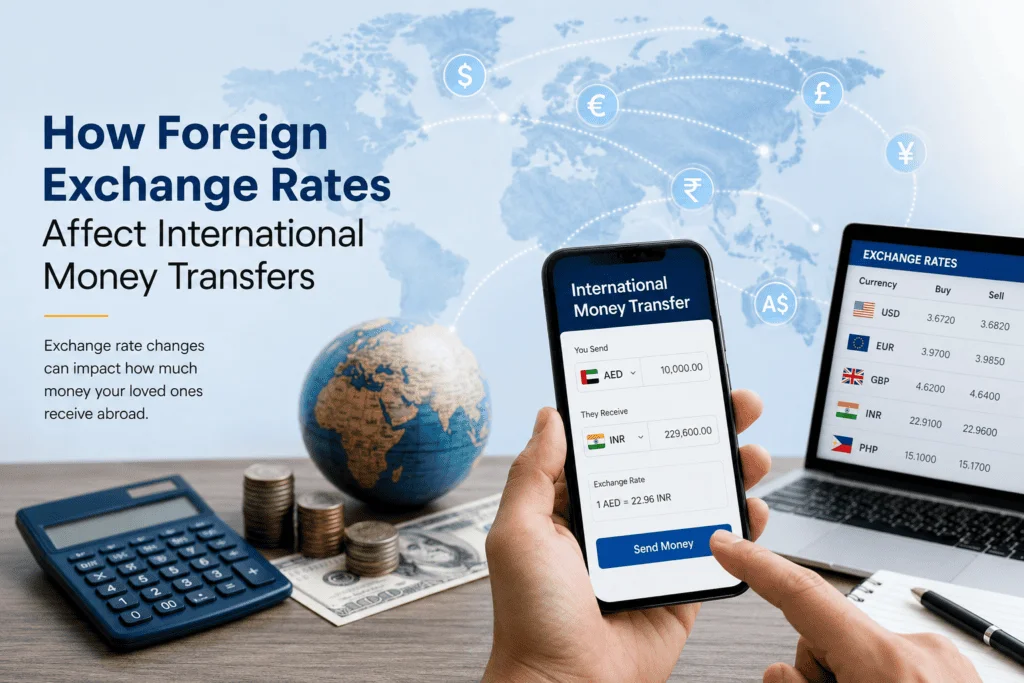
Sending money to another country involves more than entering the recipient’s details and confirming the payment. The foreign exchange rate applied during the transaction directly affects how much money the recipient receives.
Whether you are supporting family, paying education fees, settling business invoices, or making international payments, understanding how money exchange works can help you make informed financial decisions and manage transfer costs more effectively.
What Is Foreign Exchange?
Foreign exchange, often referred to as FX, is the process of converting one currency into another. Every time money is transferred between countries using different currencies, an exchange rate determines the value of one currency against another.
For example, if you send UAE Dirhams to someone receiving US Dollars or Euros, the applicable exchange rate determines the amount the beneficiary receives after the currency conversion.
Exchange rates change throughout the day due to market conditions, making them an important factor in international money transfers.
Why Exchange Rates Matter
The exchange rate directly influences the final amount received after a money exchange transaction.
Even a small movement in the exchange rate can affect the value of larger international transfers. For individuals sending money regularly or businesses making overseas payments, monitoring exchange rates may help improve overall transfer value.
Understanding exchange rates also allows customers to compare available transfer options before completing a transaction.
What Causes Foreign Exchange Rates to Change?
Exchange rates move continuously because currencies are traded in global financial markets.
Several factors may influence foreign exchange rates.
Supply and Demand
When demand for a particular currency increases, its value may rise. Higher supply may cause its value to decrease.
Economic Conditions
Inflation, economic growth, employment figures, and overall market confidence often influence currency values.
Central Bank Policies
Interest rate decisions and monetary policies announced by central banks may affect exchange rate movements.
Global Events
Political developments, international trade, and global economic conditions can also influence currency markets.
Because these factors change regularly, exchange rates rarely remain constant.
How Exchange Rates Affect International Money Transfers
Every international transfer includes a currency conversion when different currencies are involved.
For example, if the exchange rate improves before you send money, the recipient may receive more in their local currency. If the rate moves in the opposite direction, the converted amount may be lower.
This is why customers often monitor foreign exchange rates before making significant international payments.
Businesses involved in imports, exports, or supplier payments also pay close attention to exchange rate movements because they can influence overall business costs.
Understanding Currency Conversion
Currency conversion is the process of exchanging one currency for another using the applicable exchange rate.
The final amount received depends on several factors, including:
- Current exchange rate
- Transfer amount
- Applicable service fees
- Currency conversion charges
- Destination currency
Understanding these elements helps customers estimate the total value of an international transfer before confirming the transaction.
Factors to Consider Before Sending Money Abroad
Before completing an international transfer, it is helpful to review more than the exchange rate alone.
Exchange Rate
Compare the available foreign exchange rate before confirming the transaction.
Transfer Fees
Some transfers may include service or processing charges that affect the total cost.
Delivery Time
Transfer times vary depending on the destination country, payment method, and banking network.
Recipient Details
Providing accurate beneficiary information helps reduce delays and supports successful payment processing.
Currency Requirements
Some countries accept payments only in specific currencies, making currency selection an important part of the transfer process.
How Digital Banking Supports International Transfers
Digital banking has made money exchange and international payments more convenient.
Many banks now allow customers to:
- View exchange rates
- Transfer money internationally
- Track payment status
- Manage beneficiaries
- Access transfer history
- Receive payment notifications
These services help customers complete international transactions securely while providing greater visibility throughout the transfer process.
Practical Ways to Manage Exchange Rate Changes
Although exchange rates cannot be controlled, customers can take practical steps before making international transfers.
Monitor Exchange Rates
Checking exchange rate movements before transferring money may help you identify a suitable time for the transaction.
Plan Large Transfers
If you expect to make a significant international payment, planning ahead may help you respond to exchange rate movements more effectively.
Compare Total Transfer Costs
Review both the exchange rate and any applicable transfer fees rather than focusing on one factor alone.
Use Secure Banking Channels
Sending money through authorized banking channels helps improve transaction security while providing access to reliable exchange rate information.
Why Understanding Foreign Exchange Matters
Whether you are sending personal remittances or managing international business payments, understanding foreign exchange helps you make more informed financial decisions. Exchange rates influence the value of every money exchange transaction and may affect the amount received by the beneficiary. Before making an international transfer, reviewing exchange rates, transfer fees, currency conversion, and available banking services can help you better understand the overall cost of the transaction. As exchange rates change regularly, staying informed remains an important part of managing international payments.
Frequently Asked Questions
What is foreign exchange?
Foreign exchange is the process of converting one currency into another using the applicable exchange rate for international payments and currency conversion.
Why do exchange rates change?
Exchange rates change because of factors such as supply and demand, economic conditions, central bank policies, inflation, and global events.
How does foreign exchange affect international money transfers?
The exchange rate determines how much money the recipient receives after currency conversion. Changes in the rate may increase or reduce the final amount.
What should I check before sending money internationally?
Customers should review the exchange rate, transfer fees, recipient details, destination currency requirements, and estimated delivery time before completing the transfer.
Is money exchange different from foreign exchange?
The terms are closely related. Money exchange refers to converting one currency into another, while foreign exchange covers the broader market and processes that determine exchange rates.
Can digital banking help with international money transfers?
Yes. Many banks provide digital banking services that allow customers to view exchange rates, transfer funds internationally, manage beneficiaries, and monitor transaction status securely.