
Understanding At-Home Health Testing: A Complete Overview
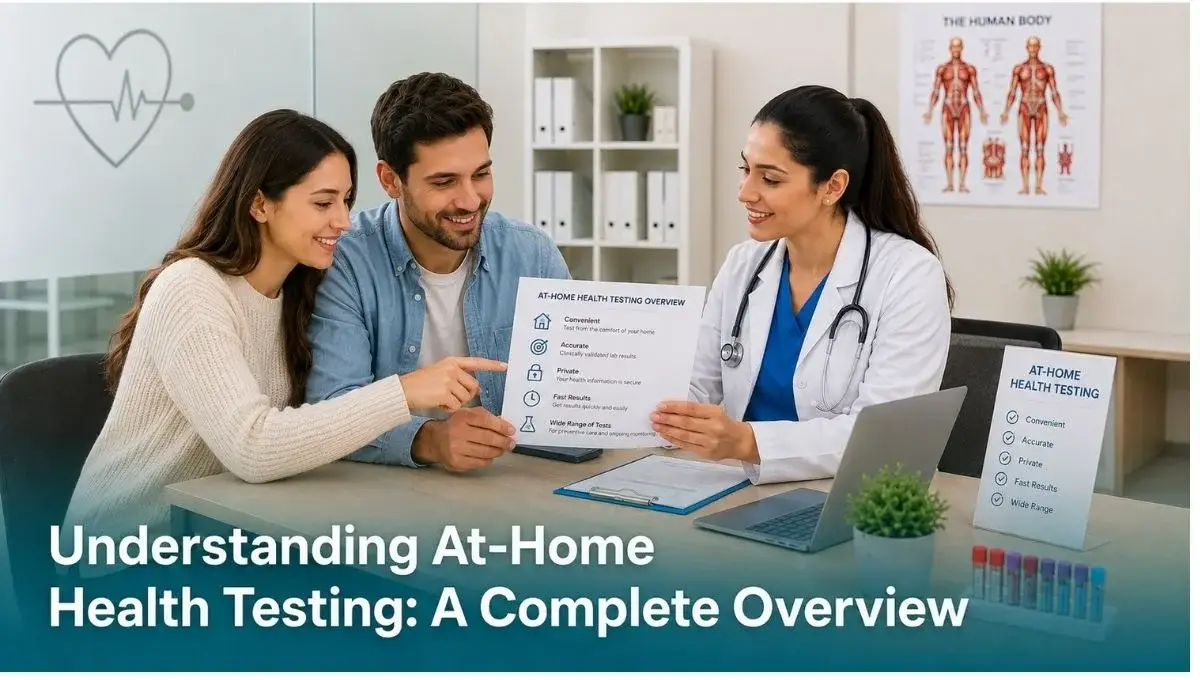
Getting a medical test used to mean clearing your schedule, sitting in a waiting room, and hoping the clinic wasn’t too busy that day. That process has changed. A growing number of people across Dubai and the wider UAE now choose a lab test at home instead, trading the clinic visit for a certified professional who comes to them. Whether it’s a routine blood panel, a confidential screening, or a specialized diagnostic test, home based testing has become a practical and increasingly common part of everyday healthcare.
This overview walks through how at-home testing works, which tests are commonly available, and what to expect at each stage of the process.
What At-Home Health Testing Actually Means
At-home health testing refers to diagnostic sample collection that happens at your location rather than inside a clinic or hospital. A trained phlebotomist or nurse visits your home, office, or hotel room with sterile equipment, collects the required sample (blood, urine, or a swab depending on the test), and transports it to an accredited laboratory for analysis. The results are typically delivered digitally, often within 24 to 72 hours depending on the complexity of the test.
This is different from over-the-counter self-testing kits, where you collect your own sample without professional supervision. Home collection services maintain the same clinical standards as an in-lab visit. The sample handling, cold chain transport, and laboratory analysis follow identical protocols, so accuracy is not compromised by convenience.
Why People Choose Home Collection
A few reasons consistently come up when people explain why they prefer a blood test at home over a clinic appointment.
Time savings. There’s no commute, no waiting room, and no need to take half a day off work.
Privacy. For sensitive screenings such as an STD test at home or an HIV test at home, avoiding a public clinic setting matters a great deal to many people. Testing in a private space removes the discomfort some associate with sexual health screening.
Accessibility. People managing chronic conditions, elderly patients, or anyone with mobility limitations benefit enormously from not having to travel.
Consistency. Since the same accredited lab processes the samples regardless of where they were collected, results carry the same clinical weight as an in-person visit.
Common Types of At-Home Tests
Routine Blood Testing
The most requested service is general blood work, covering markers like cholesterol, blood sugar, complete blood count, and vitamin levels. Within a complete blood count, indices such as the MCH blood test and MCHC test are often included. MCH measures the average amount of hemoglobin inside a single red blood cell, while MCHC measures how concentrated that hemoglobin is within the cell. Together, these values help doctors distinguish between different types of anemia and assess overall red blood cell health. Both are simple additions to a standard blood draw and require no special preparation.
Sexual Health Screening
STD test at home services have grown significantly in popularity because they combine clinical accuracy with complete discretion. A typical panel screens for chlamydia, gonorrhea, syphilis, hepatitis B and C, herpes, and HIV, using blood, urine, or swab samples depending on the infection being tested. An HIV test at home follows the same principle: confidential sample collection, laboratory-grade analysis, and secure digital delivery of results. Because many sexually transmitted infections show no early symptoms, testing remains the only reliable way to confirm status, and removing the barrier of an in-person clinic visit tends to encourage more consistent screening.
PCR Testing
A PCR test at home uses polymerase chain reaction technology to detect the genetic material of a virus or bacteria directly, rather than relying on antibody response. This makes PCR testing especially useful for early-stage infection detection, since it can identify a pathogen before the body has had time to build a measurable immune response. PCR methods are used across several diagnostic categories, including early-exposure STI screening and infectious disease panels.
Pregnancy and Prenatal Testing
Two tests come up frequently for expecting parents or those trying to confirm pregnancy. A Bhcg test measures beta-human chorionic gonadotropin, a hormone produced shortly after a fertilized egg implants in the uterine lining. It can be qualitative, simply confirming whether the hormone is present, or quantitative, measuring the exact level to track how a pregnancy is progressing. Rising or falling patterns in Bhcg levels can also help flag complications such as an ectopic pregnancy early on.
For genetic screening during pregnancy, a NIPT test Dubai service analyzes small fragments of fetal DNA circulating in the mother’s bloodstream. Non-invasive prenatal testing can be performed from around 10 weeks of gestation and screens for chromosomal conditions such as Down syndrome, Edwards syndrome, and Patau syndrome, all without the risks associated with invasive procedures like amniocentesis.
What to Expect During the Process
The general workflow across most at-home lab services follows a similar pattern:
- Booking. You choose a test or package online, by phone, or via WhatsApp, and select a convenient time and location.
- Preparation guidance. For tests requiring fasting or other preparation, the provider will let you know in advance.
- Sample collection. A certified professional arrives with sterile, single-use equipment and collects the sample discreetly.
- Laboratory analysis. Samples are transported under controlled conditions to an accredited lab, ideally one that is DHA-approved and ISO 15189 certified for quality assurance.
- Results delivery. Reports are sent digitally, usually through encrypted email or a secure messaging channel, often with the option of a follow-up consultation to interpret the findings.
Choosing a Reliable Provider
Not all home testing services maintain the same standards, so a few things are worth checking before booking. Confirm the laboratory is DHA-approved if you’re based in Dubai, since this reflects compliance with local health authority regulations. Look for ISO 15189 accreditation, which is the international standard for medical laboratory quality and competence. Ask how results are delivered and whether encrypted channels are used, particularly for sensitive tests. And check turnaround times, since these can vary from a few hours for basic panels to a few days for more specialized genetic or PCR testing.
Final Thoughts
At-home health testing has moved from a niche convenience to a mainstream part of how people manage their health, particularly in a fast-moving city like Dubai. From a simple blood test at home to more specialized screenings like NIPT or PCR testing, the core promise is the same: laboratory-grade accuracy without the friction of a clinic visit. Genex Lab provides DHA-approved home collection across Dubai and the wider UAE, covering everything from routine blood work to confidential sexual health screening and prenatal genetic testing, so you can get accurate answers without disrupting your day.