How Dubai Residents Are Skipping Clinic Queues with At-Home Diagnostics
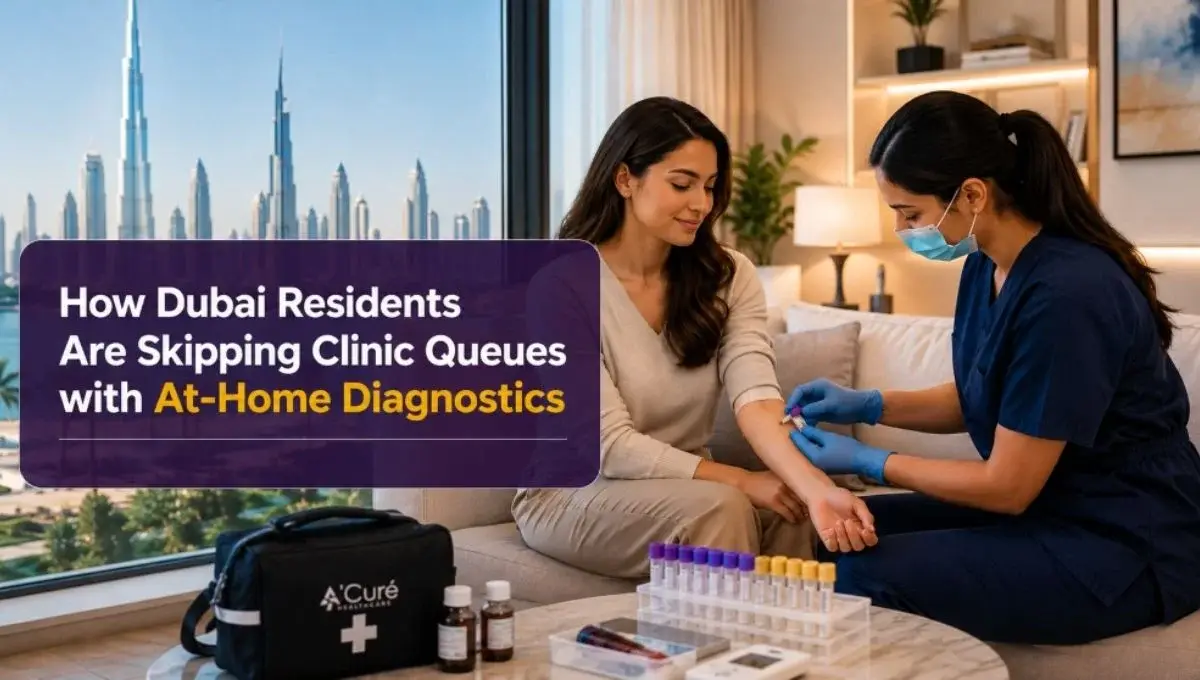
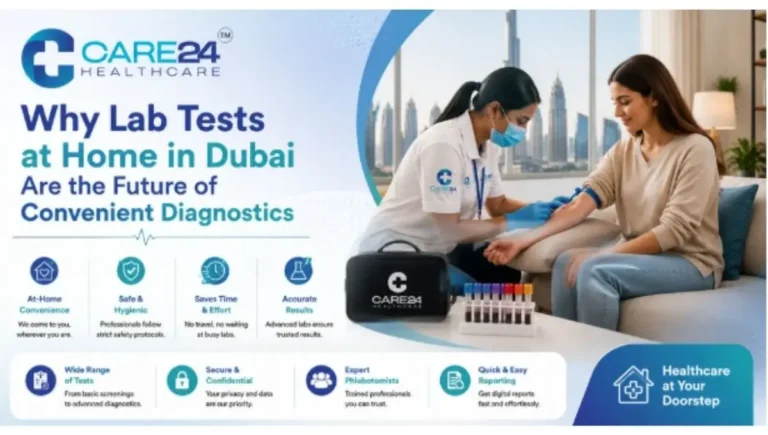
Many Dubai residents are getting their routine blood test without the hassle of travelling to a clinic, registering at reception, and waiting in queue for their turn. At-home diagnostics allow patients to book a test, a trained healthcare professional arrives at the doorstep, collects the sample, and receive the results digitally after laboratory testing.
This is designed to be useful for people juggling between busy work schedules, elderly patients with limited mobility, and individuals who need regular monitoring. It does not replace clinics from the healthcare system, but it offers another option to get required diagnostic tests without wasting additional time in a waiting room.
While Dubai continues to manage the growing healthcare demand; a shift is taking place. DHA uses population data to plan for Dubai’s future healthcare needs. Meanwhile, World Bank According to World Bank’s sourced data, there are approximately three physicians per 1,000 people in the UAE in 2023. The figure does not represent a shortage, but it shows why flexible healthcare options are required.
Why Clinic Waiting Times Remain a Concern
Dubai with its growing population now requires healthcare needs ranging from routine screenings to chronic-condition management. Clinics must manage scheduled appointments, walk-in patients, and urgent cases.
Long waiting times can delay care and affect the treatment plan, so DHA requires healthcare facilities to monitor how quickly patients are assessed after they arrive.
For routine testing, some residents would rather avoid adding another clinic appointment to an already busy day. A single parent may need a vitamin test but cannot easily leave a child at home. An older adult may find travelling tiring, while someone working long hours may struggle to squeeze in lab appointment during normal timings.
In these situations, at-home diagnostics can move the sample-collection stage out of the clinic while the testing is done within the regulated healthcare system.
Which Tests Can Be Collected at Home?
It depends on factors like the provider, the laboratory, and whether home collection is clinically suitable. Home based test options can include blood glucose checks, cholesterol profiles, liver and kidney function tests, and tests used to monitor existing conditions.
Additional services also offer vitamin and mineral testing and iron-related tests. Hormone testing may include thyroid profiles.
Wellness screenings may combine several tests such as confidential STI testing may use blood, urine, or swab samples
A person arranging a doctor at home visit may be advised to book testing after a clinical assessment. Similarly, someone contacting a doctor on call Dubai service may be directed towards home sample collection when laboratory results are needed to support the next medical decision.
How the At-Home Testing Process Works
It’s a straightforward process where provider is contacted through call, website, app, or WhatsApp booking. The patient shares basic information, selects the required test, shares the location and a suitable collection time.
The provider may ask if the patient has a doctor’s request, current symptoms and medication. Certain tests require preparation such as fasting, while others do not.
A trained professional arrives with the collection equipment, labels the samples, and collects required specimen. The samples are packaged and transported safely to a clinical laboratory.
At the laboratory, they are processed using the same testing procedures applied to samples collected at clinics. Results are then shared through a secure digital approved method. Patients should ask whether a doctor will review or explain if the results are abnormal or whether they need to arrange a separate consultation.
At-home diagnostics can reduce unnecessary clinic visits without removing professional laboratory analysis.
Is Home Testing Less Accurate Than Clinic Testing?
The location where a sample is collected does not affect the accuracy of the result. What matters is if the sample is taken and labelled correctly. Also, that it is transported safely, processed on time, and analysed by a licensed laboratory.
DHA’s standards for clinical laboratory services includes mandatory laboratory licensing, staffing, specimen handling, equipment, quality systems, and reporting. DHA also requires its licensed clinical laboratories to meet its official accreditation standards.
This means reputable at-home diagnostics should follow the same quality standards as those of a clinic-based testing. The only difference is the collection point. The analysis should be completed through a regulated laboratory using established quality procedures.
However, not every test is suitable for home collection. Some health conditions require urgent examination, scans, or immediate treatment rather than waiting for laboratory results.
Licensing and Safety Standards Still Apply
Home-based sample collection is a healthcare activity and should be arranged through an authorised provider.
DHA also states that point-of-care testing may be performed through licensed home healthcare services when it is delivered by licensed facilities and healthcare professionals. Providers must maintain quality-control procedures and clearly identify the tests they are authorised to offer.
Before booking, residents can ask for the name of the licensed facility, the collector’s professional details, the laboratory processing the sample, expected reporting times, and how personal health information will be protected.
The same checks matter when booking a doctor at home or arranging a doctor on call Dubai consultation. Convenience should not replace professional licensing, patient identification, infection-control procedures, or proper medical documentation.
At-Home Testing Is Not the Same as Treatment
Diagnostic testing can identify a possible health issue but cannot provide treatment on its own. A blood test may show warning signs such as infection markers, vitamin deficiency, or abnormal blood sugar, but a qualified professional must review the result in the context of the patient’s symptoms and history.
Some patients may later be advised to receive medication, visit a clinic, or undergo further testing. Others may ask about services such as an IV Drip at home, but intravenous treatment should only be provided after an appropriate assessment and when it is medically justified.
An IV Drip at home should not be treated as a routine addition to every wellness test. Abnormal or severe symptoms may require hospital assessment instead.
A More Flexible Part of Dubai Healthcare
At-home diagnostics are giving Dubai residents a practical option to complete the tests without joining a long queue for the sample-collection stage. This becomes very particularly helpful for routine monitoring, wellness screening, mobility limitations, and demanding family or work schedules.
However, it can only work well when proper regulations are being followed. Samples must be collected by qualified and trained staff, transported safely, processed by licensed laboratories, and followed by suitable medical advice when results require attention.
As Dubai’s healthcare demand grows, at-home diagnostics are likely to remain part of a broader shift towards care that is more flexible while still connected to already present clinical and laboratory standards.