
Paediatric Cardiology Treatment in Dubai: A Parent’s Practical Guide
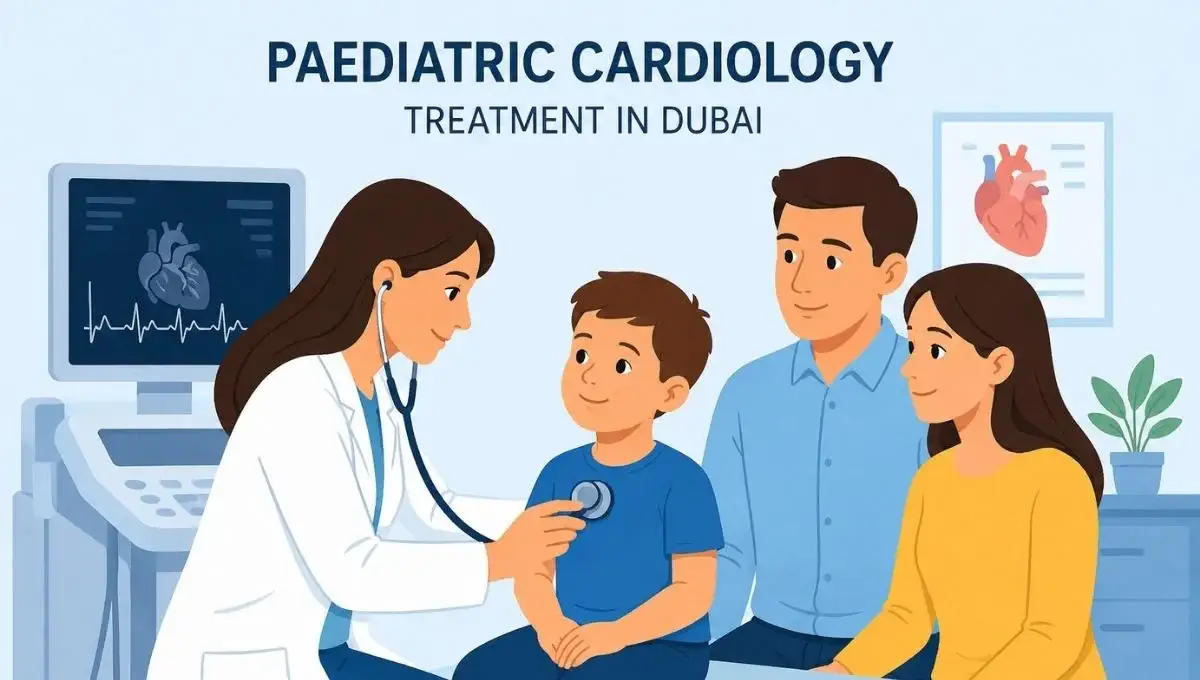
Paediatric cardiology addresses a distinct set of clinical priorities. The developing heart grows continuously throughout foetal life and early childhood, with smaller-calibre vessels, faster resting heart rates, and structural characteristics that differ from the adult cardiovascular system. The conditions seen in this field are predominantly congenital structural, such as variations present from birth. While adult cardiology focuses largely on coronary artery disease, paediatric cardiologists manage congenital structural defects, disorders of cardiac rhythm, and abnormalities of the myocardium, often observed within hours of delivery.
An appointment with an experienced and board-certified paediatric cardiologist can feel overwhelming for any parent. The encouraging reality is that outcomes today are better than ever, supported by advanced imaging, surgical technique, and paediatric intensive care. This guide explains what paediatric cardiology treatment in Dubai covers, how conditions are identified, and what the effective treatments are.
What Paediatric Cardiology Covers
Paediatric cardiology handles every heart problem from before birth through adolescence. That includes:
- Congenital Heart Defects (CHD): Structural problems present at birth. About one in 100 newborns worldwide.
- Arrhythmias: Abnormal heart rhythms. Supraventricular Tachycardia (SVT) is the most common type in children.
- Cardiomyopathies: Diseases of the heart muscle itself.
- Acquired Heart Disease (AHD): Kawasaki disease, Rheumatic Heart Disease, Myocarditis.
- Syncope and chest pain evaluation: Common in older children and usually benign, but always investigated.
Doctors divide congenital disabilities into two broad groups.
- Acyanotic defects (VSD, ASD, PDA) allow enough oxygen but pump abnormally.
- Cyanotic defects (Tetralogy of Fallot, transposition of the great arteries, truncus arteriosus) reduce blood oxygen and cause bluish skin or lips.
How Are Heart Problems Spotted in Children?
Detection can happen at five different stages. Each one matters.
Before birth: Foetal echocardiography at 18 to 22 weeks of pregnancy can pick up most major structural defects. Mothers with a family history of CHD, diabetes, or exposure to certain medications in pregnancy are usually offered this scan.
At Birth: Pulse oximetry screening, a simple clip on the hand or foot, measures blood oxygen saturation. Low readings trigger further testing. This is now standard practice in most maternity units in Dubai.
In Infancy: Heart defects are found during routine check-ups when a doctor hears a heart murmur. Poor weight gain, difficulty feeding, fast breathing, or repeated chest infections may also be early signs.
In Childhood: As children grow, symptoms such as chest pain, fainting during exercise, or an abnormal ECG during a health or sports screening may lead to further evaluation.
In Adolescence: A defect identified earlier may need to be monitored until the patient is old enough for intervention.
What Paediatric Treatment Plans
- Diagnosis First
Every treatment plan starts with imaging. Echocardiography is the first test, sound waves, no radiation, safe even in newborns. An ECG records the electrical pattern. Complex cases may need cardiac MRI or CT for finer detail. Cardiac catheterisation is sometimes used both to diagnose and to treat in the same sitting.
- Catheter-Based Interventions
Many defects no longer need open surgery. A cardiologist threads a thin tube through the vascular system in the groin or neck and guides it to the heart. ASD and PDA can be closed with devices. Narrowed valves can be opened with a balloon (valvuloplasty). Most children go home the next day.
- Paediatric Cardiac Surgery
When catheter treatment is not possible, surgery is the next step. The range runs from relatively simple procedures, closing a hole through a small chest incision, to complex open-heart operations on newborns. Most are done with the child on a heart-lung bypass machine. A typical operation lasts three to six hours. Recovery in the paediatric ICU takes a few days, with most children home within seven to ten days.
Medication and Long-Term Follow-Up
Some defects do not need any procedure at all. They are watched. Others need medication, diuretics for fluid overload, beta-blockers for arrhythmia, and ACE inhibitors to protect heart function. About 15 per cent of children who have heart surgery may need another operation later in life. Lifelong follow-up with a cardiologist trained in adult congenital heart disease is now the standard of care.
Limits of Surgery
Some congenital heart defects require a staged treatment approach. Children born with a single functional ventricle may undergo a series of operations, known as the Fontan pathway. Regular follow-up is important to improve blood flow and support heart function, and some children may need ongoing treatment as they grow.
Choosing the Right Centre
For families in Dubai, choosing where to seek care is the most important decision you will make. Look for a centre with paediatric cardiac surgeons trained specifically in congenital repairs — not just adult cardiac surgery. Look for a dedicated paediatric ICU, on-site paediatric anaesthesia, foetal echocardiography, and a structured long-term follow-up programme.
When parents ask which is the Best hospital in Dubai for their child’s cardiac care, the answer depends on the specific condition and the child’s age. The right centre combines 24/7 paediatric cardiology cover, on-site cath lab access, and a team experienced in the full range of congenital heart defects, from newborn emergencies to adolescent follow-up.
Conclusion
Paediatric cardiology has changed significantly over the past two decades. Defects once considered fatal in infancy are now repaired in newborns. Rhythm problems that once required lifelong medication are now cured with a single catheter procedure. This advanced surgical procedure also exists in Dubai.
The right team, found early, can change a child’s entire life trajectory. If your child has been referred to a paediatric cardiologist, do not delay the appointment. Time, in this branch of medicine, genuinely matters, and for many families.