
Cardiology: Coronary Artery Bypass Surgery and Advanced Heart Care
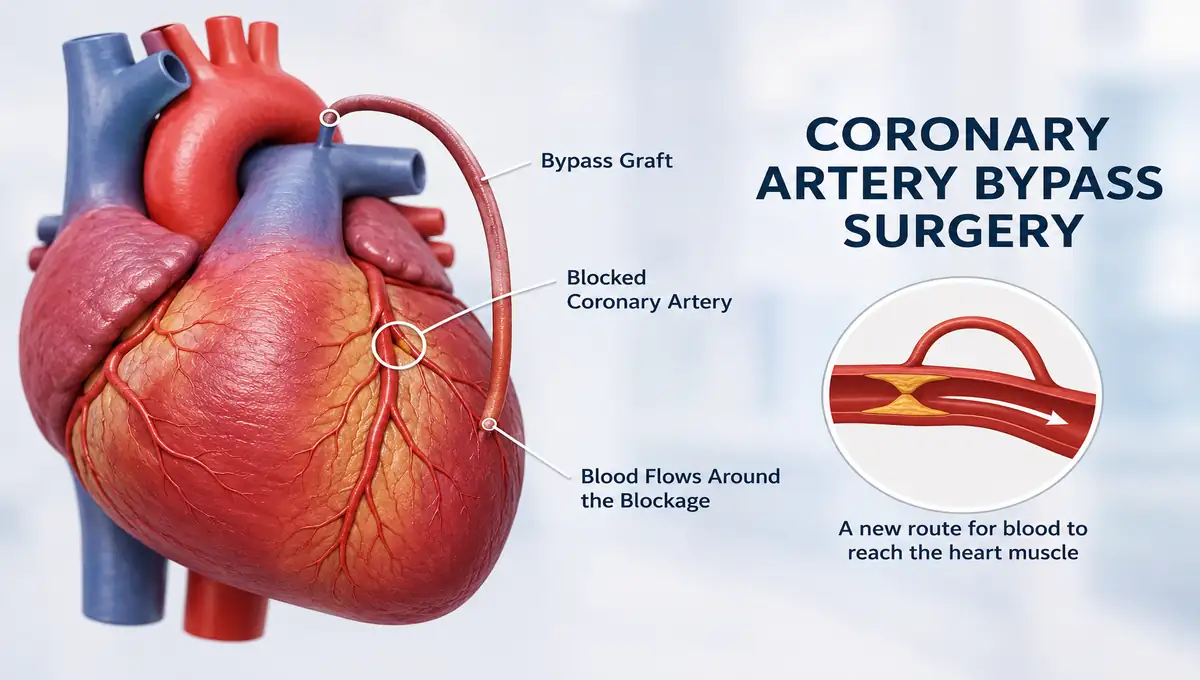
The coronary arteries supply oxygen-rich blood to the heart muscle. When these vessels become significantly narrowed or blocked, the heart may not receive enough blood, particularly during physical activity. This can cause chest pain, breathlessness and reduced exercise tolerance and, in some cases, increase the risk of a heart attack.
Treatment depends on the number and location of blocked arteries, the severity of coronary artery disease and the patient’s overall health. While medicines and catheter-based procedures may be suitable for some patients, coronary artery bypass surgery can provide another option when several arteries are affected or when angioplasty is not the most suitable approach.
What Is Coronary Artery Disease?
Coronary artery disease develops when fatty deposits build up inside the walls of the arteries supplying the heart. Over time, these deposits can make the artery narrower and restrict blood flow.
Some people have stable symptoms that appear mainly during exertion. Others may develop an acute blockage that requires emergency treatment.
Common symptoms can include:
- Chest pressure or discomfort
- Breathlessness during activity
- Unusual tiredness
- Pain spreading to the arm, shoulder, jaw or back
- Reduced ability to perform physical activities
- Sweating, nausea or dizziness during an acute cardiac event
Not every person experiences typical chest pain. New or unexplained symptoms should therefore be assessed by a healthcare professional.
When Is Bypass Surgery Considered?
Coronary artery bypass surgery is not required for every person with blocked coronary arteries. The decision depends on the extent of coronary disease and the expected benefit of surgery.
A cardiac team may consider bypass surgery when:
- Several major coronary arteries are significantly narrowed
- The left main coronary artery is affected
- Blockages are complex or difficult to treat with angioplasty
- Symptoms continue despite appropriate medical treatment
- The pattern of coronary disease makes bypass surgery more suitable than catheter-based treatment
- The patient has certain combinations of coronary disease and other health conditions
The recommendation is made after reviewing cardiac imaging, symptoms, medical history and overall surgical risk.
How Is Coronary Artery Bypass Surgery Performed?
During coronary artery bypass surgery, the surgeon creates a new route for blood to reach the heart muscle. A healthy blood vessel taken from another part of the patient’s body is used as a graft.
The graft is connected beyond the narrowed or blocked section of the coronary artery. Blood can then travel through the new pathway and reach the heart muscle.
Depending on the patient’s coronary anatomy and the number of vessels requiring treatment, one or several bypass grafts may be needed.
Preparing for Bypass Surgery
Before surgery, the cardiac team carries out investigations to understand the condition of the coronary arteries and assess the patient’s fitness for the procedure.
The evaluation may include:
- Electrocardiogram
- Echocardiogram
- Coronary angiography
- Blood investigations
- Chest imaging
- Assessment of kidney function
- Review of existing medical conditions and medicines
The surgeon and cardiologist use these findings to plan the operation and discuss the expected benefits, possible risks and recovery process with the patient.
What Happens After Surgery?
Following bypass surgery, patients are initially monitored closely in a specialised cardiac care setting. The medical team checks heart rhythm, blood pressure, breathing, fluid balance and other important parameters.
As recovery progresses, the patient begins to sit up, walk and gradually increase physical activity under medical guidance. Breathing exercises and physiotherapy may also form part of early recovery.
The length of hospital stay varies according to the patient’s condition and progress after surgery.
Recovery and Cardiac Rehabilitation
Recovery from bypass surgery takes time because the body needs to heal from a major operation while the heart adjusts to improved blood supply.
Cardiac rehabilitation can help patients gradually regain strength and confidence. The programme may include supervised physical activity, dietary guidance, risk-factor management and education about maintaining cardiovascular health.
Patients should follow the surgical team’s instructions regarding wound care, medicines, exercise and returning to work or other routine activities.
Life After Coronary Bypass Surgery
Bypass surgery improves blood flow around blocked coronary arteries, but it does not remove the underlying risk factors for coronary artery disease. Long-term management therefore remains important.
Depending on individual needs, patients may be advised to:
- Take prescribed cardiac medicines regularly
- Control blood pressure and cholesterol
- Manage diabetes effectively
- Maintain a healthy weight
- Follow a heart-healthy eating pattern
- Remain physically active after medical clearance
- Avoid tobacco products
- Attend scheduled cardiac reviews
These measures can help protect cardiovascular health and reduce the risk of further coronary problems.
Choosing Cardiac Care in Dubai
Coronary artery disease may require input from several specialists. Cardiologists assess the coronary circulation and determine whether medication, angioplasty or surgery may be appropriate. Cardiac surgeons perform bypass procedures when surgery is indicated, while nurses, physiotherapists and rehabilitation teams support recovery.
Patients searching for a top cardiology hospital in Dubai should consider the availability of cardiac diagnostics, interventional cardiology, cardiac surgery, intensive care and rehabilitation services.
Aster Hospitals provides cardiac assessment and treatment based on individual clinical requirements, with specialist teams involved according to the patient’s diagnosis and treatment needs.
Coronary Artery Bypass Surgery in Dubai
Patients considering coronary artery bypass surgery in Dubai should first undergo a detailed cardiac evaluation. The treatment decision depends on the location and severity of coronary blockages, symptoms, heart function and other medical factors.
A multidisciplinary assessment allows the cardiac team to compare bypass surgery with other available treatment options. This helps ensure that the recommended approach is appropriate for the patient’s specific coronary condition rather than based solely on the presence of a blockage.
When to Seek Urgent Cardiac Care
Sudden or severe chest discomfort should not be ignored. Emergency medical attention is particularly important when chest symptoms occur with breathlessness, sweating, nausea, fainting or discomfort spreading to the arm, jaw, back or shoulder.
People with previously diagnosed coronary artery disease should also seek medical advice if their usual symptoms become more frequent, severe or occur with less physical activity than before.
Frequently Asked Questions
Is bypass surgery the same as angioplasty?
No. Angioplasty uses a catheter, usually with a balloon and sometimes a stent, to improve blood flow through a narrowed coronary artery. Bypass surgery creates a new route around the blocked section using a blood vessel graft.
How many bypasses can be performed during one operation?
The number depends on how many coronary vessels require treatment and the location of the blockages. A patient may need one or several grafts during the same operation.
Does bypass surgery cure coronary artery disease?
Bypass surgery improves blood flow to areas supplied by the treated arteries, but coronary artery disease can continue to affect other vessels. Long-term medicines, lifestyle changes and regular cardiac follow-up remain important.
How long does recovery take after bypass surgery?
Recovery differs between patients. The hospital recovery period and return to normal activities depend on the patient’s general health, the complexity of surgery and progress during rehabilitation.