Satwa Market Dubai: Fabrics, Tailors, Shopping & Souk Guide
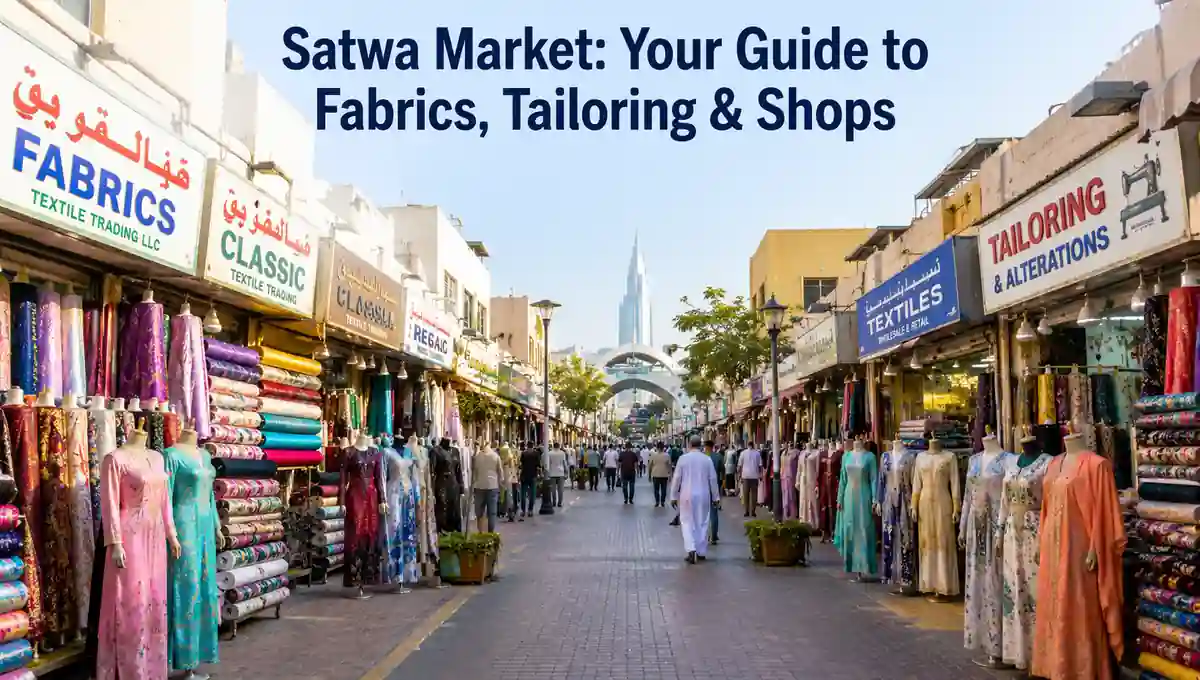
Satwa Market is one of Dubai’s most useful areas for buying fabrics, sewing materials and arranging tailoring in the same neighbourhood. It is especially popular with people looking for dress fabrics, trims, threads, custom stitching and independent street shops away from large shopping malls.
The name can be slightly confusing. Satwa Market, Satwa Souk and Satwa fabric market do not always refer to one enclosed market building with a single entrance. In practice, fabric shops, tailors and other businesses are spread across the wider Al Satwa shopping area.
This guide explains where to shop, what you can buy, how to choose fabric, how tailoring works, how to reach the area and what to check before visiting.
Quick Answer
Satwa Market is best understood as a street-shopping area in Al Satwa rather than one traditional enclosed souk. The area is known for fabric shops, textile stores, sewing supplies, tailoring and alterations. Shops have their own opening hours, prices and product ranges, so it is better to save the location of a specific shop before travelling. If you are shopping for fabric, compare material quality, width, fibre type and price before asking for it to be cut.
Where Is Satwa Market in Dubai?
Satwa Market is located within the wider Al Satwa neighbourhood in Dubai. Shopping activity is spread across commercial streets around Al Satwa Road, 2nd December Street and the area near Satwa Roundabout.
Visitors sometimes become confused because different map services may show Satwa Market, Satwa Souk or Satwa fabric market at slightly different locations.
Instead of expecting one large market building, think of Satwa as a street-shopping district. Fabric shops, textile stores, tailors, sewing-supply businesses, supermarkets, restaurants and other local services are spread throughout the surrounding streets.
For a first visit, the easiest approach is to choose one fabric shop or landmark as your starting point and explore nearby businesses from there.
If you want to understand the wider area before visiting, our Al Satwa Dubai guide explains the neighbourhood in more detail.
You can also use the Satwa Roundabout Dubai map guide when you need a familiar local navigation point.
| Quick Fact | Details |
|---|---|
| Area | Al Satwa, Dubai |
| Shopping style | Street shops and independent businesses |
| Main speciality | Fabrics, textiles, sewing supplies and tailoring |
| Market layout | Spread across several nearby streets |
| Opening hours | Depend on each individual shop |
| Best navigation method | Search for the exact shop or landmark |
| Public transport | RTA buses serve the Al Satwa area |
| Prices | Depend on fabric type, width, quality and quantity |
What Can You Buy in Satwa Market?
The area is strongly associated with fabrics and tailoring, but shoppers can find much more than rolls of cloth.
Fabrics and Textiles
The Satwa fabric market area is useful for dressmakers, fashion students, tailors, designers, home sewers and people who want material for custom clothing.
Depending on the shop and current stock, you may find:
- Cotton
- Linen
- Silk
- Satin
- Chiffon
- Crepe
- Tulle
- Lace
- Printed fabrics
- Suiting material
- Lining fabric
- Synthetic blends
- Decorative and embroidered fabrics
Different fabric shops specialise in different materials. One shop may have a strong range of formal fabrics, while another may be better for colourful dress material, trims or everyday cloth.
This is one reason Satwa can be useful for people searching for fabric shops in Dubai. You can compare several physical materials instead of relying only on photographs from an online store.
Sewing and Tailoring Supplies
Fabric is only one part of many sewing projects. Shops in and around Satwa may also sell sewing and tailoring materials such as:
- Thread
- Embroidery thread
- Lace
- Ribbon
- Decorative trims
- Buttons
- Hooks
- Fasteners
- Zips
- Beads
- Sequins
- Embellishments
- Lining material
- Basic tailoring accessories
A dedicated sewing-supply shop may have a better selection of these smaller items than a large fabric showroom.
If you need something specific, keep a reference photo on your phone. Showing the seller the style, trim, button or colour you need can be easier than trying to describe it.
Everyday Shopping
Al Satwa is not only a textile district.
The surrounding streets also contain supermarkets, clothing stores, cafeterias, restaurants, mobile phone shops, household stores and everyday services.
This makes Satwa practical for residents and workers who want to combine fabric shopping with other errands.
Fabric Shops in Satwa Dubai
Satwa has several fabric and textile businesses, but there is no need to treat one shop as the automatic best choice for every shopper.
The right store depends on:
- The type of fabric you need
- Your budget
- The quantity required
- Fibre preference
- Colour or pattern
- Whether you need tailoring
- Whether you need sewing accessories
One important local fabric business is Regal Fabrics Satwa.
Regal is one option for shoppers looking for fabrics in the Satwa area, including people who may also require tailoring support. Our separate Regal Fabrics guide covers the business in more detail without turning this wider Satwa Market guide into a single-shop review.
Other Satwa fabric shops may be more suitable for different materials, prices or quantities.
If you are making a larger purchase, compare at least two or three shops before asking for the fabric to be cut.
Take note of:
- Fibre composition
- Fabric width
- Price per metre or other quoted unit
- Colour
- Product code
- Required quantity
This makes it easier to compare similar materials fairly.
How to Choose the Right Fabric
Choosing fabric only because you like the colour can lead to a poor purchase. The material also needs to suit the garment or project you are making.
Start With the Final Use
Think about what the fabric will become.
Material for a flowing dress is different from cloth used for a structured jacket. Curtain fabric, formal suiting, an abaya, a shirt and a costume can all require different weights and finishes.
If a tailor will make the item, ask for their recommendation before buying expensive material.
Check the Fibre Composition
Ask what the fabric contains.
Common fibres include cotton, linen, silk, polyester and other synthetic or blended materials.
Different fibres can behave differently when washed, worn or stitched.
Do not assume an expensive or soft fabric is automatically natural. Ask the seller about the material composition when it matters to you.
Check How the Fabric Falls
Fabric drape means the way the material hangs and moves.
A fabric can look very different when opened compared with how it appears folded on a shelf.
Ask to see enough material to understand how it falls before buying several metres.
Check Transparency
Hold lighter material against light where appropriate.
You may discover that a fabric needs lining. That can change your total cost and the amount of material required.
Confirm the Width
Always consider fabric width when comparing prices.
Two shops may quote a similar price per metre, but one fabric may be much wider than another.
Ask your tailor how much material is required based on the actual fabric width.
Inspect the Material Before Cutting
Look for:
- Stains
- Holes
- Pulled threads
- Printing faults
- Colour differences
- Weaving problems
If you need several pieces to match, try to buy them from the same roll or batch.
Ask About Fabric Care
Find out whether the material can be machine washed, hand washed or requires dry cleaning.
This matters especially when you are buying fabric for everyday clothing.
A beautiful material may not be practical if its cleaning requirements do not suit your lifestyle.
Tailors and Custom Stitching in Satwa
Fabric shops and tailors are closely connected in Al Satwa.
You can often buy material and then visit a nearby tailor for stitching, alterations or a custom garment.
Before buying fabric, ask the tailor:
- How many metres are required?
- Does the garment need lining?
- Does the design need extra fabric?
- Can the tailor work with that particular material?
- What is the stitching price?
- How long will the work take?
- How many fittings are needed?
- Are minor alterations included?
This order can save money.
Choose your design first, speak to the tailor, confirm the required amount of fabric and then make the purchase.
Buying fabric first can create problems if you later discover that you bought too little material or selected something unsuitable for the design.
Detailed comparisons of individual tailors belong in a separate Tailors in Satwa guide rather than being forced into this pillar article.
Fabric Prices in Satwa
There is no single standard fabric price that applies across Satwa.
Prices can depend on:
- Fibre type
- Fabric width
- Weave
- Finish
- Embroidery
- Brand
- Design
- Quantity
- Current stock
- Material quality
Two fabrics that look almost identical can have very different prices.
Instead of looking only for the cheapest fabric, compare the actual material.
Check the Unit Price
Ask whether the quoted price is:
- Per metre
- Per yard
- Per piece
- Per bundle
- For a full roll
Do not assume every shop uses the same pricing method.
Ask About Minimum Quantity
Retail fabric shops may allow customers to buy a few metres.
Wholesale textile suppliers may require larger quantities.
If you only need enough material for one dress, shirt or small sewing project, tell the seller before choosing the fabric.
Compare Similar Materials
A lower price does not automatically mean better value.
The cheaper fabric may be:
- Narrower
- Thinner
- A different fibre blend
- Lower quality
- More transparent
- Less suitable for your project
Compare materials with similar width, composition and finish.
Can You Bargain in Satwa?
Some independent shops may have flexibility, especially when you are buying a larger quantity.
However, bargaining should not be treated as a guaranteed part of every purchase.
Ask politely for the final price and compare shops if the purchase is important.
A successful Satwa Market shopping trip is about finding the right material at a fair price, not simply finding the lowest number.
Retail vs Wholesale Fabric Shopping
People searching for a Dubai textile market often mix retail and wholesale shopping together, but they are different.
A retail customer may need only three or four metres for one garment.
A wholesale customer may need:
- Large quantities
- Multiple rolls
- Repeated colours
- Business supply
- Regular orders
Not every Satwa shop operates as a wholesale fabric supplier.
If you need bulk material, explain the required quantity at the start and ask whether wholesale pricing is available.
If you only need a small quantity, make sure the shop is willing to cut the amount you need before spending time comparing colours.
Satwa Market Opening Hours
There is no single Satwa Market opening time that safely applies to every business in the area.
Fabric stores, tailors and sewing-supply shops operate independently.
Their timings can also change on:
- Fridays
- UAE public holidays
- Ramadan
- Special occasions
- Seasonal periods
If you need one particular shop, check that business directly before travelling.
This is especially important if you plan to visit early in the morning or are travelling a long distance.
For general browsing, late afternoon or evening can be more comfortable during Dubai’s hotter months, but this does not mean every shop follows the same evening schedule.
How to Reach Satwa Market
Al Satwa is connected to Dubai’s public transport network and can be reached by bus, taxi, ride-hailing services or car.
By Bus
Al Satwa Bus Station is an important transport point in the neighbourhood.
The best bus route depends on your starting location, and Dubai transport services can change over time.
For that reason, check the current RTA journey before travelling rather than relying on an old route list.
Once you reach Al Satwa, use the exact fabric shop or business location on your map for the final part of the trip.
By Taxi or Ride-Hailing
Taxi and ride-hailing services can be one of the easiest options when you already know the shop you want.
Give the driver:
- Exact shop name
- Street or nearby landmark
- Saved map pin
Simply saying “Satwa Market” may be less precise because different map services can show different market-labelled locations.
By Car
Driving can be useful when you expect to buy a large amount of material.
However, Al Satwa is a busy street-shopping neighbourhood.
Parking availability can depend on the exact street and time of day, so do not assume that you will find a space directly outside your chosen fabric shop.
Save the shop location before travelling and check current navigation conditions.
Best Time to Shop in Satwa
The ideal time depends on the shops you plan to visit.
If you want to compare several stores, avoid arriving close to closing time.
During hotter months, walking between fabric shops can be tiring around midday. Late afternoon or evening may be more comfortable when the businesses you need are open.
A useful plan is:
- Choose three or four shops before leaving home.
- Save their map locations.
- Check their opening hours.
- Visit the most important shop first.
- Compare nearby alternatives afterwards.
This is much easier than arriving in Satwa and searching randomly.
Common Fabric Shopping Mistakes to Avoid
Buying Before Speaking to the Tailor
You may buy too little fabric or choose the wrong material.
Confirm the design and required quantity first.
Comparing Only the Price
A cheaper fabric may have a different width, composition or quality.
Compare similar materials.
Not Checking the Cloth
Inspect the fabric before it is cut.
Look for damage, marks and colour variation.
Forgetting About Lining
Some fabrics look opaque while folded but become transparent when opened.
Check before buying.
Not Asking the Return Policy
Cut fabric may have different exchange or return conditions from packaged retail products.
Ask before the material is cut.
Buying Too Little
Matching the exact shade later can be difficult if the original roll sells out.
Confirm your required quantity in advance.
Walking Without a Plan
Satwa is a street-shopping area.
Saving the shops you need can reduce unnecessary walking, especially during hot weather.
What Should You Bring for Fabric Shopping?
You do not need much, but a few things can make the visit easier.
Bring or save:
- Garment measurements
- Required fabric quantity
- Design reference
- Colour reference
- Tailor instructions
- Lining requirements
- Trim or button reference photos
- Notes about preferred fibres
Keeping this information on your phone helps when comparing different textile shops.
Satwa vs Bur Dubai for Fabric Shopping
Satwa and Bur Dubai can both be useful for buying fabrics, but the shopping experience is different.
Satwa works particularly well when you want to combine:
- Fabric shopping
- Sewing supplies
- Tailoring
- Alterations
- Everyday neighbourhood shopping
Bur Dubai may appeal more to shoppers who specifically want its traditional textile-shopping environment or who are already visiting the older parts of Dubai.
Neither area is automatically better.
Choose according to:
- The fabric you need
- Shops available
- Price
- Quantity
- Tailoring requirements
- Travel convenience
If the right fabric and tailor are already available in Satwa, travelling across Dubai simply because another market is more famous may not be necessary.
Food and Other Useful Places Nearby
Fabric shopping can take time, especially when you compare several materials or wait for tailoring measurements.
Al Satwa has many cafés, cafeterias and restaurants, so you can easily stop for food during a longer shopping trip.
Our guide to food around Satwa Roundabout covers nearby dining separately without mixing restaurant recommendations into this fabric-shopping guide.
Frequently Asked Questions
Is Satwa good for fabric shopping?
Yes. Satwa is well known for fabric shops, textile businesses, sewing materials and nearby tailoring. It is especially useful when you want to see and compare physical fabrics before buying instead of ordering material online.
Is Satwa Market one enclosed souk?
No. The name is commonly used for a wider shopping area in Al Satwa. Fabric shops, tailors and related businesses are spread across nearby commercial streets rather than being limited to one enclosed market building.
Can I buy only a few metres of fabric?
Many retail fabric shops may sell cut lengths, but minimum quantities depend on the business and material. Ask before choosing the fabric, particularly if you only need enough for one garment.
Are there tailors near the fabric shops?
Yes. Tailoring is one of the services associated with Al Satwa, and some fabric businesses also provide tailoring. It is still better to confirm the tailor’s required fabric quantity before buying.
Is fabric cheap in Satwa?
Satwa offers a wide range of fabric shops, but there is no single standard price. Cost depends on fibre, width, quality, finish and quantity. Compare similar materials at more than one shop before deciding.
What is the best way to find a specific fabric shop?
Search for the exact business name and save its map location before travelling. This is more reliable than relying only on a generic Satwa Market or Satwa Souk pin.
Final Thoughts
Satwa Market is a strong option for people who want to compare fabrics in person, buy sewing materials and arrange tailoring within the same Dubai neighbourhood.
Its main advantage is variety and convenience rather than one single market building.
Choose the shops you want before travelling, confirm opening hours, speak to your tailor before buying expensive material, inspect fabric before it is cut and compare quality as well as price.
With a little planning, the wider Satwa fabric-shopping area can make it much easier to find the right material for your clothing, tailoring or sewing project.