Al Satwa Big Mosque Dubai: Location, Prayer & Visitor Guide
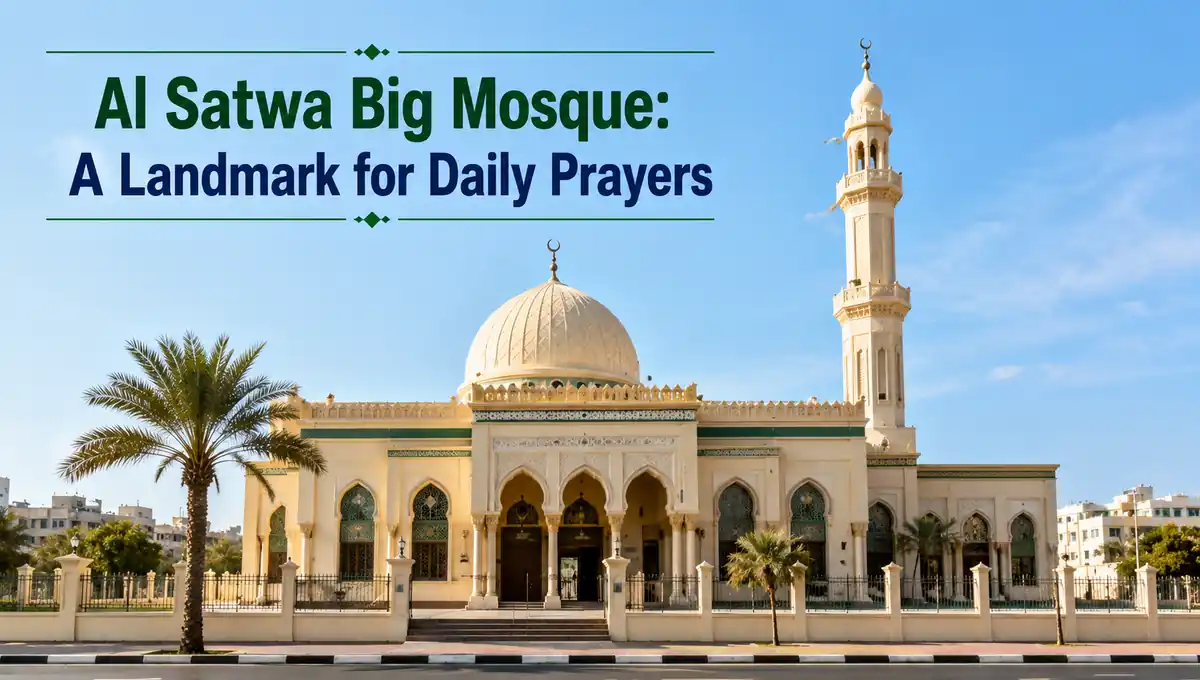
Al Satwa Big Mosque is an active place of worship and a familiar landmark on Al Satwa Road in Dubai. On maps, you may also find it listed as Al Satwa Al Kabeer Masjid, while people commonly search for Satwa Big Mosque or Satwa Grand Mosque.
For worshippers, the most useful information is the correct location, current prayer times, Friday-prayer planning and transport. Visitors also need to remember that this is a functioning neighbourhood mosque, so access, dress and behaviour should respect people who are there to pray.
Quick Answer
Al Satwa Big Mosque is located on Al Satwa Road in the Al Satwa area of Dubai. The mosque is also known as Al Satwa Al Kabeer Masjid and in Arabic as مسجد السطوة الكبير. Daily Salah times change throughout the year, so use Dubai’s official IACAD prayer-time service rather than an old timetable. If you are travelling for Jumu’ah, Ramadan or Eid prayers, allow extra time because transport, parking and congregation size can differ from a normal weekday visit.
Where Is Al Satwa Big Mosque in Dubai?
The mosque is on Al Satwa Road in Al Satwa, Dubai. Current local sources identify it as Al Satwa Al Kabeer Masjid, which helps distinguish it from other mosques and mosque-related bus stops in the wider Satwa area.
| Quick Fact | Details |
|---|---|
| Common name | Al Satwa Big Mosque |
| Map name | Al Satwa Al Kabeer Masjid |
| Arabic name | مسجد السطوة الكبير |
| Area | Al Satwa, Dubai |
| Road | Al Satwa Road |
| Main use | Daily and Friday congregational prayer |
| Current prayer times | Check IACAD / Dulook DXB |
| Transport | Bus, taxi, ride-hailing or car |
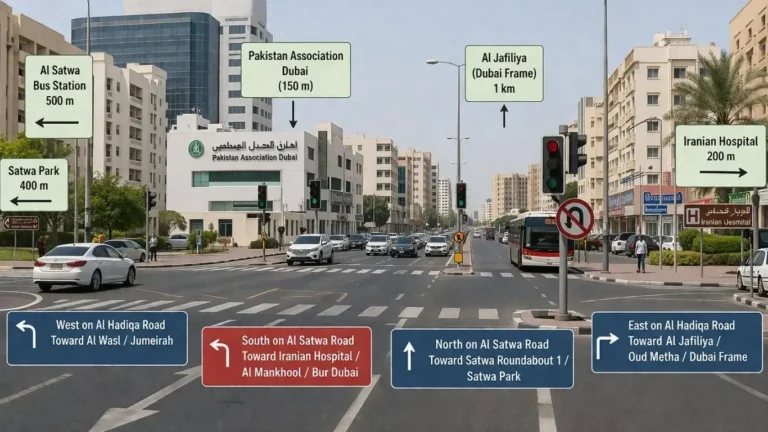
If you are unfamiliar with the district, the Al Satwa neighbourhood guide gives useful context about the surrounding streets, services and landmarks.
The Satwa Roundabout map can also help you understand the wider road layout before travelling.
For navigation, search the full name Al Satwa Al Kabeer Masjid rather than entering only “mosque in Satwa”. That reduces the risk of following a pin for another nearby mosque.
What Is the Mosque Also Called?
Several names used online refer to the same mosque:
- Al Satwa Al Kabeer Masjid
- Satwa Big Mosque
- Satwa Grand Mosque
- مسجد السطوة الكبير
The Arabic word Al Kabeer means “the big” or “the great”, which explains why English listings may use either Big Mosque or Grand Mosque.
For taxi, ride-hailing and map searches, Al Satwa Al Kabeer Masjid, Al Satwa Road is the clearest wording to use.
Prayer Times at Al Satwa Big Mosque
Daily Salah times should be checked for the actual date of your visit because Fajr, Dhuhr, Asr, Maghrib and Isha change throughout the year.
Dubai’s Islamic Affairs and Charitable Activities Department provides the official Prayer Times service and operates Dulook DXB, a government prayer-time application.
Check current Dubai prayer times on IACAD
This is more reliable than saving a prayer timetable from an old article.
Map opening hours are not a prayer timetable
Some local listings display a broad period during which the mosque may be accessible. Those hours should not be interpreted as the exact schedule for the five daily prayers.
Prayer times move with the date, particularly Fajr and Maghrib.
For example, a map might show the mosque open from early morning until late evening, but that does not tell you the exact start time of each congregation.
Prayer time and Iqamah are different
There is another important distinction.
The published Dubai prayer time tells you when the prayer period begins. Iqamah is the call marking the start of the congregational prayer inside a mosque.
The congregation may begin some time after the published city prayer time.
If you are travelling specifically to join a congregation, allow a reasonable margin rather than assuming the prayer begins at the exact minute shown on a general Dubai prayer timetable.
Friday Prayer and Jumu’ah Planning
Friday prayer deserves more planning than an ordinary weekday visit because Jumu’ah brings a larger congregation.
An exact mosque-specific Friday Iqamah time should be checked using current local or official information rather than taken from an old guide. Daily and Friday prayer arrangements can change, while official prayer information remains the safer starting point.
If you plan to attend Jumu’ah:
- check the current prayer time before leaving;
- arrive early enough to enter before the sermon;
- allow extra travel time;
- expect the surrounding area to be busier;
- avoid depending on finding parking immediately outside.
This is especially useful for someone travelling from another part of Dubai rather than walking from within Satwa.
Ramadan, Taraweeh and Eid
Ramadan and Eid information is seasonal, so permanent times should not be placed in an evergreen mosque guide.
IACAD publishes current religious-event information for Dubai and maintains prayer services that can be checked close to the date. Its 2026 Ramadan material, for example, directed users to Dulook DXB for accurate prayer-time information.
During Ramadan, the mosque may be busier around evening prayers and Taraweeh.
For Eid Al-Fitr or Eid Al-Adha, check the current year’s official Dubai announcement shortly before the occasion. Do not rely on an Eid time saved from a previous year.
How to Reach Satwa Big Mosque
The mosque can be reached by bus, taxi, ride-hailing or car. Public transport is particularly useful because the surrounding Satwa streets can become busy around major prayer times.
By Bus
RTA’s Satwa transport information identifies mosque-related stops in the neighbourhood, including Satwa, Masjid and Satwa, Masjid 2. Current route material also shows Satwa, Masjid 2 as part of the active local network.
The guide to the Satwa Masjid bus stop is useful when you need more detail about nearby stops and how they fit into the Satwa road network.
Al Satwa Bus Station is another important transport reference for people arriving from other parts of Dubai.
Routes can change, so check RTA’s live journey information on the day you travel.
Plan your journey with Dubai RTA
By Metro
There is no Metro station directly beside the mosque.
Depending on your starting point, a practical trip may involve taking the Metro to the wider Trade Centre or central Dubai area and completing the journey by bus, taxi or walking.
RTA’s current network material shows connections between Trade Center Metro Bus Stop and Satwa stops, including Satwa, Masjid 2.
For this reason, the best Metro option depends on your origin rather than one station always being the correct choice.
By Taxi or Ride-Hailing
Use:
Al Satwa Al Kabeer Masjid, Al Satwa Road
as your destination.
This is clearer than simply asking for “Satwa mosque”.
By Car
Driving is possible, but parking around the mosque should not be treated as guaranteed.
A current Property Finder guide also describes nearby public parking as limited, especially around busy prayer periods.
If you are driving for Friday prayer, Ramadan evenings or Eid, arriving early is sensible. Use only permitted spaces and keep mosque entrances, pavements and nearby business access clear.
Mosque Facilities and Prayer Preparation
As an active neighbourhood mosque, the building is designed around daily worship and congregational prayer.
When you arrive, follow signs and local arrangements for prayer areas, shoes and ablution. Ablution, also called wudu, is the ritual washing carried out before Salah.
Exact facility arrangements, including entrances and designated prayer areas, can change or be managed differently during crowded religious occasions.
If you have a specific accessibility requirement, it is better to check current arrangements rather than depending on an old directory description.
Mosque Etiquette for Worshippers and Visitors
A visit to Al Satwa Big Mosque should respect the fact that people are using the space for prayer and reflection.
Dress modestly. Clothing should not be revealing, and visitors should follow any additional instructions displayed at entrances or prayer areas.
Keep your voice low inside and around active prayer spaces.
Shoes should not be worn on carpeted prayer areas. Follow the on-site arrangement for leaving footwear.
Mobile phones should be kept silent during prayer.
Avoid walking directly in front of a person who is praying.
Photography should also be handled carefully. Do not photograph worshippers without permission, and never interrupt prayer to take pictures.
What if you are visiting rather than praying?
Some Dubai mosques operate organised cultural-tour programmes, but visitors should not assume that every neighbourhood mosque offers the same access.
Al Satwa Big Mosque should be treated first as an active place of worship.
If your purpose is sightseeing, follow signs and staff instructions and avoid entering prayer areas when access is unclear. A mosque that officially advertises visitor tours is a better choice if an organised cultural experience is your main goal.
Friday Crowds and Parking
Friday is usually the period when planning matters most.
A person arriving just before Jumu’ah may have more difficulty finding nearby parking or moving through surrounding streets than someone arriving for a quieter daily prayer.
Consider using the bus or a taxi if parking uncertainty would make you late.
During Ramadan nights and Eid, similar crowd considerations may apply.
Leaving a few extra minutes for the final part of your journey is usually more practical than aiming to arrive at the last possible moment.
Understanding the Area Around the Mosque
The mosque sits within an established residential and commercial neighbourhood rather than an isolated religious complex.
If you want background on how this part of Dubai developed, the history of Al Satwa gives the wider neighbourhood story.
People spending more time locally can also explore other places to visit in Al Satwa rather than treating the mosque as a standalone sightseeing destination.
For people watching their daily transport and visitor costs, the guide to travelling around Al Satwa provides broader practical context.
These pages handle the wider neighbourhood journey while this guide remains focused on the mosque.
Frequently Asked Questions
What is Satwa Big Mosque also called?
The mosque is commonly listed as Al Satwa Al Kabeer Masjid. You may also see Satwa Grand Mosque or the Arabic name مسجد السطوة الكبير. Using Al Satwa Al Kabeer Masjid with Al Satwa Road is the clearest option for navigation.
Are prayer times the same every day?
No. Fajr, Dhuhr, Asr, Maghrib and Isha times change through the year. Use IACAD’s current Dubai prayer-time service or Dulook DXB rather than a permanent timetable saved from an old article.
Can non-Muslims visit?
Visitors should treat the mosque primarily as an active place of worship. Do not assume that it operates the same tourist-access programme as mosques that specifically advertise organised tours. Follow on-site signs and staff guidance if you are visiting rather than praying.
Is parking available nearby?
Parking exists in the surrounding urban area, but availability is not guaranteed and can become tighter around Friday prayer and other busy religious occasions. Arrive early, use legal spaces and consider public transport or a taxi when a large congregation is expected.
Final Thoughts
Al Satwa Big Mosque is an important place of daily worship and a useful landmark within the Satwa community. Use the full Al Satwa Al Kabeer Masjid name when navigating, check IACAD for current prayer times and leave extra time when attending Friday, Ramadan or Eid prayers.
The key practical point is not to confuse map opening hours with Salah times or assume that a published city prayer time is the exact mosque-specific Iqamah time. Checking current information before travelling makes the visit easier and more reliable.